Spain's PM Holds Traffickers Accountable for 60,000 Migrants Reaching Ceuta
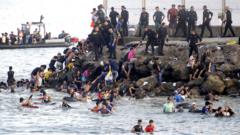
Spain's PM Holds Traffickers Responsible for Mass Migration Surge at Ceuta
Spain's Prime Minister attributed the unprecedented influx of migrants reach Ceuta from Morocco directly to organized human trafficking networks operating across the Mediterranean. The administration emphasized that criminal syndicates orchestrated the coordinated movement of approximately 60,000 individuals across the border in a concentrated timeframe, highlighting the serious security and humanitarian implications of such large-scale operations.
Mass Return to Morocco Confirms Temporary Nature of Crossing
Officials reported that by Friday evening, the vast majority of those who had entered Spanish territory through Ceuta had voluntarily or forcibly returned across the border to Morocco. This reversal underscores the temporary and organized nature of the surge, suggesting coordination beyond individual migrants seeking permanent relocation. The rapid return pattern indicates the movement was orchestrated by traffickers rather than representing a sustained migration wave toward Europe.
Italy's Schengen Suspension Creates Regional Tensions
In response to the escalating situation, Italy announced the suspension of its Schengen agreement provisions governing free movement between the Italian state and Madrid. This unprecedented action represents a significant diplomatic consequence and reflects growing frustration among European Union member states regarding migration management at southern borders. The Schengen Zone, established to facilitate seamless travel across participating nations, operates under mutual trust assumptions that Italy deemed compromised by Spain's border control challenges.
Understanding the Schengen Zone Implications
The suspension of Schengen protocols carries substantial economic and political ramifications throughout Europe. The agreement fundamentally enables unrestricted movement of people and goods among signatory countries, underpinning the EU's integrated market structure. When individual nations withdraw from these provisions, even temporarily, they signal fundamental concerns about security and regulatory failures that ripple across the entire continental framework.
Trafficking Networks and Geopolitical Dimensions
The scale of migrants reach Ceuta from Morocco suggests sophisticated criminal infrastructure capable of mobilizing tens of thousands within limited timeframes. These networks exploit vulnerable populations while generating substantial revenue through smuggling operations. The involvement of Moroccan border regions raises questions about enforcement capabilities and potential complicity among local authorities in facilitating such movement.
European Response and Border Security
Member states confronted the reality that migration pressures continue escalating despite previous policy initiatives. Spain's experience demonstrated vulnerabilities in maritime surveillance and land border management along the Mediterranean corridor. The Italian suspension of Schengen provisions forced broader conversations about coordination mechanisms and burden-sharing across European institutions.
Humanitarian and Security Considerations
While traffickers exploit migrants for profit, the individuals themselves face extraordinary dangers throughout their journeys. The rapid return of most arrivals raises concerns about their treatment during processing and whether adequate humanitarian provisions were implemented. Spain's authorities balanced security imperatives with legal obligations regarding asylum applicants and vulnerable populations.
Looking Forward: Policy Responses and Cooperation
The incident intensified debates regarding EU migration policy coherence and external border management. Officials acknowledged that addressing trafficking networks requires multinational cooperation targeting criminal organizations at their source. Enhanced coordination between Spain, Morocco, and broader European security agencies emerged as essential for preventing future surges while protecting legitimate migrants and asylum seekers.


