Spain's PM Holds Traffickers Accountable for 60,000 Migrants in Ceuta
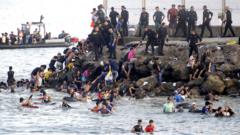
Migrants Reach Ceuta: PM Points Finger at Traffickers
Spain's government has emphasized the role of criminal trafficking networks following the arrival of 60,000 migrants who reached Ceuta from Morocco. The country's Prime Minister addressed the situation by directing responsibility toward organized crime groups facilitating the irregular border crossings, rather than migrants themselves seeking better living conditions.
Return to Morocco Nearly Complete
According to official statements, the majority of individuals who successfully entered Ceuta had returned to Morocco by Friday evening. Spanish authorities coordinated with Moroccan counterparts to manage the mass movement of people across the Strait of Gibraltar. This coordinated response reflected both nations' interest in controlling irregular migration patterns affecting the region.
The return process demonstrated the temporary nature of many crossings, as migrants faced insufficient resources and accommodation within the Spanish enclave. Border management teams worked throughout the week to facilitate orderly returns while gathering information about trafficking operations directing these movements.
Italy Suspends Schengen Mobility Agreement
In response to the migration situation, Italy took the significant step of suspending its Schengen agreement on free movement with Spain. This decision represented a dramatic escalation in European tensions surrounding border security and migration policy. The Schengen Area, established to allow unrestricted travel between member states, became a point of contention as countries clashed over responsibility for managing irregular arrivals.
Italy's suspension of free movement provisions with Madrid reflected broader frustrations with how Spain manages its Mediterranean and African borders. Officials in Rome argued that insufficient controls allowed migrants to transit toward Italy after arriving on Spanish territory. This suspension marked a rare use of emergency protocols within the Schengen framework, indicating severe diplomatic strain.
Trafficking Networks Under Scrutiny
Spanish authorities emphasized that organized criminal organizations orchestrate these mass migration attempts, charging fees to vulnerable individuals desperate for entry into Europe. Intelligence services identified sophisticated smuggling networks exploiting maritime routes across the Strait of Gibraltar. These criminal enterprises prioritize profit over migrant safety, frequently endangering lives through overcrowded vessels and inadequate navigation.
The role of traffickers in facilitating 60,000 migrants' arrival underscored the complexity beyond simple border security issues. Law enforcement agencies across Spain, Morocco, and allied nations coordinated investigations targeting trafficking infrastructure. These networks operated across multiple countries, requiring international cooperation to disrupt their operations effectively.
Regional Migration Pressures
Ceuta, Spain's North African enclave, faces unique geographic and demographic challenges regarding migration. Located directly across from Morocco, the territory experiences persistent pressure from individuals seeking European entry. The recent surge highlighted how quickly conditions can escalate when weather patterns, economic desperation, and trafficking organization align.
Spanish officials noted that similar incidents occurred periodically, though the scale of 60,000 arrivals represented an exceptional event. Migration patterns reflected broader conditions in North Africa and sub-Saharan regions, where poverty, conflict, and limited opportunities drove movement toward Europe. Ceuta's small population and limited resources made managing such arrivals particularly challenging for local authorities.
European Coordination Challenges
The situation exposed ongoing disagreements about migration responsibility within the European Union. Spain argued it bore disproportionate burden as a primary Mediterranean entry point, while Italy disputed this characterization. The Schengen agreement suspension represented Italy's protest against what it viewed as inadequate Spanish border enforcement.
European Commission officials called for renewed dialogue between member states to address systemic migration challenges. Rather than unilateral suspensions, Brussels urged coordinated policy development balancing humanitarian concerns with security interests. The incident demonstrated that individual nations could not effectively address migration independently without international cooperation.
Looking Forward
Spain's government vowed to strengthen border security infrastructure and international trafficking enforcement efforts. The Prime Minister's focus on blaming trafficking networks reflected policy emphasis on combating criminal organizations rather than penalizing migrants themselves. Future prevention strategies would reportedly emphasize intelligence sharing, maritime patrols, and disrupting smuggling operations before migrations attempts occurred.


