Hamas Disarmament Plan Presents Obstacles Yet Offers Gaza Peace Opportunity
Complex Path to Hamas Disarmament in Gaza
The Hamas disarmament plan represents a potentially transformative development in Middle East peace efforts, though substantial hurdles complicate its implementation. Political analysts and international observers acknowledge that achieving disarmament of armed groups requires navigating intricate diplomatic, military, and humanitarian considerations affecting millions of residents in Gaza.
The proposal to disarm Hamas operatives emerges amid ongoing tensions and decades of mistrust between conflicting parties. International mediators have emphasized that any Hamas disarmament plan demands comprehensive agreements addressing security guarantees, political representation, and economic reconstruction. These multifaceted requirements underscore the unprecedented complexity surrounding current negotiations.
Political Obstacles to Implementation
Political realities present formidable barriers to successful disarmament initiatives. Governmental authorities, militant organizations, and international stakeholders maintain divergent interests that complicate consensus-building. The historical context of previous failed negotiations informs current skepticism regarding whether parties will commit to binding agreements requiring surrender of military capabilities.
Trust deficits represent perhaps the most significant impediment to progress. Decades of conflict have cultivated profound mutual suspicion among participants. Armed groups express concerns about personal security and political viability following disarmament, while regional powers worry about compliance verification and enforcement mechanisms. These legitimate anxieties demand transparent frameworks and credible international oversight.
Military Dimensions and Regional Security
The military dimension presents technical and strategic complexities requiring careful attention. Hamas operates with decentralized command structures, extensive weapons caches, and tunnel networks developed over years. Effective disarmament necessitates comprehensive inventory systems, secure weapons storage facilities, and verified decommissioning procedures monitored by neutral international observers.
Regional powers maintain competing interests regarding Gaza's security architecture. Neighboring countries express concerns about potential power vacuums or alternative militant organizations assuming control of abandoned weaponry. These legitimate security anxieties demand sophisticated coordination among multiple state and non-state actors.
Humanitarian Challenges and Population Impact
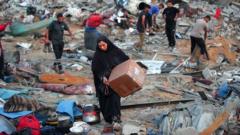
The humanitarian catastrophe affecting Gaza's civilian population fundamentally shapes disarmament negotiations. Thousands of deaths and extensive infrastructure destruction have created desperate conditions requiring urgent reconstruction efforts. Successful Hamas disarmament plan implementation depends substantially on simultaneous humanitarian assistance, economic development, and social stabilization programs.
Civilian support for disarmament initiatives correlates directly with perceptions of personal security and economic opportunity. Populations experiencing ongoing hardship demonstrate reluctance endorsing military demobilization absent credible commitments to improved living conditions, employment opportunities, and essential services restoration.
International Mediation and Verification Mechanisms
International mediators propose comprehensive verification frameworks ensuring compliance and preventing non-compliance. Such mechanisms require neutral monitoring organizations with genuine independence, adequate resources, and enforcement capabilities. Previous peace efforts demonstrate that verification systems lacking credibility or adequate support frequently collapse when facing determined violations.
Multinational peacekeeping forces or observer missions might complement disarmament verification efforts. However, regional and international political considerations regarding force composition, mandate scope, and operational authorities remain substantially contested. Establishing legitimacy and effectiveness requires careful diplomatic negotiation addressing legitimate sovereignty concerns.
Economic Reconstruction as Disarmament Foundation
Sustainable disarmament depends fundamentally upon economic reconstruction and legitimate livelihood opportunities. Military demobilization without alternative employment pathways creates instability and recruitment vulnerabilities for rival organizations. International donors must commit substantial resources toward Gaza economic development, including infrastructure rehabilitation, business development programs, and employment initiatives.
The Hamas disarmament plan cannot succeed absent credible economic prospects for affected populations. Historical precedents demonstrate that disarmament agreements incorporating economic development components achieve substantially higher success rates compared to purely security-focused initiatives.
Rare Opportunity Amid Challenges
Despite formidable obstacles, the current disarmament proposal represents meaningful progress toward regional de-escalation and conflict resolution. International consensus regarding peace necessity, combined with humanitarian catastrophe impacts, creates potential diplomatic openings previously unavailable. Stakeholders recognize that continued conflict produces only additional suffering without resolving fundamental grievances.
Success requires genuine commitment from multiple parties, substantial international support, and innovative approaches transcending previous failed negotiations. While certainty remains elusive, the Hamas disarmament plan offers Gaza's suffering population legitimate hope for reduced violence and improved conditions. Realizing this potential demands sustained diplomatic effort, credible security guarantees, and transformative economic commitment from international community members.


