Hamas Disarmament Plan Holds Promise Despite Significant Obstacles in Gaza
Hamas Disarmament Initiative: A Complex Path Forward
The Hamas disarmament plan represents a pivotal moment in efforts to establish lasting stability in Gaza, despite facing formidable barriers. This ambitious proposal attempts to address one of the region's most intractable challenges while acknowledging the profound complexities inherent in implementing such transformative change.
Understanding the Political Landscape
The contemporary political environment in Gaza presents numerous complications that extend far beyond the simple act of disarmament. Years of conflict, institutional mistrust, and competing interests have created a landscape where consensus proves exceptionally difficult to achieve. Multiple stakeholders hold divergent priorities, making coordinated action extraordinarily challenging.
The Human Cost and Destruction
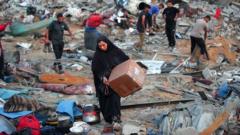
The humanitarian dimension cannot be overlooked when discussing the Hamas disarmament plan. Thousands of lives have been lost, entire neighborhoods have been reduced to rubble, and the social fabric of Gaza has been fundamentally altered. These tragic realities weigh heavily on any negotiation process and complicate the path toward meaningful agreement.
Rebuilding Amid Crisis
Infrastructure devastation extends across the territory, affecting hospitals, schools, and residential areas. Reconstruction efforts must run parallel to any disarmament initiative, creating interconnected challenges that demand simultaneous attention and resources.
Trust as the Fundamental Challenge
The absence of mutual trust represents perhaps the most significant obstacle to implementing the Hamas disarmament plan effectively. Decades of confrontation have created deep suspicions between all parties involved. Previous agreements have frequently broken down due to perceived violations and miscommunications, establishing a pattern that current negotiations must overcome.
International Involvement and Support
Successfully advancing the Hamas disarmament plan requires robust international engagement and guarantees. External parties must provide credible assurances and monitoring mechanisms to ensure compliance from all involved parties. Without such oversight, skepticism regarding commitment to the agreement remains justifiably high.
Economic Considerations
Economic stability forms another crucial component of any viable agreement. The region requires substantial investment in reconstruction and development initiatives. Economic opportunity and improved living conditions could incentivize cooperation with the Hamas disarmament plan among Gaza's population.
Security Architecture Redesign
Implementing the Hamas disarmament plan necessitates creating entirely new security arrangements. Alternative mechanisms for maintaining order and protecting civilians must be developed and tested. This institutional transformation requires careful planning and staged implementation.
Cautious Optimism Amid Challenges
Despite numerous obstacles confronting the Hamas disarmament plan, observers note rare moments of opportunity. Changing regional dynamics, international pressure, and mutual recognition of the costs of continued conflict create openings for dialogue. These windows of opportunity, though fragile, suggest that breakthrough negotiations remain theoretically possible.
Path Forward and Next Steps
Moving beyond current stalemate requires creative problem-solving and genuine commitment from all stakeholders. The Hamas disarmament plan must be accompanied by complementary initiatives addressing governance, reconstruction, and economic development. Piecemeal approaches prove insufficient to address Gaza's multifaceted challenges comprehensively.


