Hamas Disarmament Plan Could Bring Peace to Gaza Despite Major Challenges
Hamas Disarmament Initiative: A Complex Path Forward for Gaza
A Hamas disarmament plan represents one of the most promising yet challenging opportunities for bringing sustained peace to Gaza. While the proposal carries substantial promise for regional stabilization, political realities, ongoing military complications, and decades of mistrust between opposing parties create formidable obstacles that threaten to derail negotiations.
The Core Challenge: Building Trust in a Fractured Landscape
The fundamental difficulty in pursuing Hamas disarmament stems from the profound absence of trust among all stakeholders involved in the conflict. Years of hostility, military operations, and broken agreements have created deep skepticism about whether any party will genuinely honor commitments. The international community, neighboring nations, and local populations all harbor legitimate concerns about whether disarmament provisions would be verifiable and enforceable.
Without functioning institutional frameworks and credible monitoring mechanisms, establishing confidence between previous adversaries becomes exponentially more difficult. Each side fears that unilateral concessions might be exploited while the other party maintains hidden weaponry or retains the capacity for renewed aggression.
The Humanitarian and Structural Complications
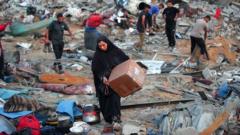
Beyond the political dimensions, the humanitarian devastation across Gaza creates concrete barriers to successful disarmament negotiations. The destruction of infrastructure, displacement of civilian populations, and scale of casualties have left the territory in dire conditions. Any meaningful agreement must simultaneously address immediate reconstruction needs while pursuing long-term security arrangements.
The competing priorities of survival, recovery, and security create inherent tensions within any proposed framework. Communities struggling with basic services and humanitarian assistance may prioritize reconstruction over participatory disarmament processes. This divergence between urgent humanitarian needs and security imperatives complicates diplomatic progress considerably.
Political Fragmentation and Power Dynamics
Multiple competing authorities and political factions further complicate Hamas disarmament prospects. Various militant organizations, nationalist groups, and international actors each possess different strategic interests and red lines. Achieving consensus among such fragmented power structures requires unprecedented coordination and compromise.
Regional geopolitical considerations add another layer of complexity. External actors with significant influence maintain competing objectives regarding Hamas's role, the balance of power, and ultimate political outcomes. These external pressures frequently undermine local negotiation efforts and inject additional demands into already complicated discussions.
Why This Moment Offers Rare Opportunity
Despite these substantial obstacles, current conditions present unprecedented diplomatic openings for Hamas disarmament discussions. International pressure, humanitarian imperatives, and stakeholder exhaustion from prolonged conflict have created unusual alignment around the necessity for negotiated solutions. The cost of continued military confrontation has become increasingly unsustainable for all parties involved.
Key international actors, human rights organizations, and regional powers have intensified calls for comprehensive peace frameworks. This convergence of external pressure, combined with internal recognition that military solutions have reached diminishing returns, creates a narrower window for serious diplomatic engagement around disarmament initiatives.
Pathway to Implementation: Realistic Expectations
Any successful Hamas disarmament arrangement would require carefully sequenced phases with interim confidence-building measures. Early-stage agreements might focus on establishing transparent monitoring systems, international verification mechanisms, and gradual weapon stockpile reductions rather than immediate, comprehensive disarmament.
Connecting disarmament provisions to meaningful reconstruction investments and political representation could incentivize compliance while addressing underlying grievances that fuel continued militarization. Economic development programs, institution-building support, and genuine political participation mechanisms might provide non-military paths toward security and prosperity.
The international community's role in guaranteeing implementation commitments and maintaining sustained pressure proves essential. Multilateral oversight, including representatives from neutral countries and respected international organizations, could provide credibility that unilateral arrangements cannot achieve.
Long-term Stability Considerations
Ultimately, successful Hamas disarmament must connect to broader regional peace architectures that address underlying conflicts and competing territorial claims. Security arrangements divorced from political settlements and justice mechanisms will likely prove temporary and unstable.
Creating conditions where militant movements lose organizational rationale requires simultaneous progress on governance, reconstruction, and reconciliation processes. Hamas disarmament becomes meaningfully sustainable only when populations perceive that non-violent political participation offers genuine pathways toward representation and security.
Conclusion: Hope Amid Uncertainty
While Hamas disarmament faces substantial political, military, and practical obstacles, the convergence of humanitarian imperatives and diplomatic opportunity offers rare potential for meaningful progress. Success demands unprecedented commitment from all parties, sustained international engagement, realistic phasing of implementation steps, and integration of disarmament within broader peace frameworks that address underlying grievances and security concerns affecting Gaza's future stability.


