Gaza Disarmament Plan Offers Path Forward Despite Political Hurdles
Complex Path to Hamas Disarmament in Gaza
A Hamas disarmament agreement represents one of the most challenging diplomatic undertakings in modern conflict resolution. The Hamas disarmament Gaza initiative brings together multiple stakeholders navigating unprecedented political complexities. Despite substantial obstacles, this framework offers a glimmer of possibility for addressing the region's deepest grievances.
The proposal addresses fundamental questions about weapons control, territorial governance, and security arrangements. Implementation requires unprecedented levels of cooperation among parties that have demonstrated profound distrust throughout decades of conflict. Political realities and military considerations create formidable barriers to successful execution.
Political Obstacles to Implementation
The political landscape surrounding any Hamas disarmament arrangement involves numerous competing interests. Israeli security concerns intersect with Palestinian national aspirations in ways that defy simple compromise. Regional actors maintain competing strategic objectives that complicate direct negotiations between primary parties.
Political factions within both Israeli and Palestinian societies oppose components of potential agreements. Hardliners on each side view concessions as existential threats. The internal political divisions make unified decision-making extraordinarily difficult for leadership attempting to advance negotiations.
Military and Security Considerations
Military realities on the ground present tangible obstacles to disarmament frameworks. Verification mechanisms require international oversight and compliance monitoring systems. Building confidence in implementation procedures demands structural guarantees that satisfy security requirements of all parties.
The weapons stockpiles distributed throughout Gaza's infrastructure create logistical challenges for any collection and disposal program. Underground tunnels and hidden caches complicate comprehensive accounting procedures. Establishing transparent inventory systems requires cooperation from organizations historically resistant to external monitoring.
Human Cost and Humanitarian Dimensions
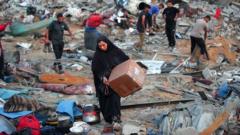
The devastating humanitarian consequences of recent conflict shape negotiations' emotional and political dimensions. Thousands of deaths create deep psychological barriers to reconciliation efforts. Widespread destruction throughout Gaza influences population sentiment regarding proposed agreements.
Families grieving lost members face difficulty accepting arrangements that might seem to ignore their suffering. Humanitarian organizations emphasize urgent reconstruction needs alongside security discussions. The humanitarian dimension cannot be separated from political and military negotiations.
Trust Deficit Among Parties
Zero trust environments characterize current relationships between negotiating parties. Previous agreements that failed create skepticism about new commitments. Historical violations of agreements undermine confidence in proposed verification mechanisms.
Each side maintains deep suspicions regarding the other's genuine commitment to peaceful resolution. Intelligence agencies and military establishments express doubts about compliance capabilities. Building confidence from positions of profound mistrust requires innovative diplomatic approaches.
International Dimension and Regional Stability
The Gaza peace plan extends beyond direct participants to encompass broader regional dynamics. International observers and external powers maintain vested interests in negotiation outcomes. Regional actors provide support and resources that influence local dynamics substantially.
Neighboring countries worry about spillover effects and destabilization potential. International organizations maintain humanitarian and monitoring responsibilities. The multilateral dimension adds complexity while potentially providing neutral facilitation pathways.
Destruction and Reconstruction Challenges
The physical devastation throughout Gaza creates enormous reconstruction requirements. Infrastructure destruction complicates governance and service delivery during transitional periods. Rebuilding efforts require resources and international coordination alongside political agreement.
Economic rehabilitation represents a parallel process to security arrangement implementation. Housing, healthcare, and education systems require substantial investment. The reconstruction dimension influences population support for diplomatic agreements.
Emerging Possibilities Despite Challenges
Despite formidable obstacles, the current proposal signals genuine diplomatic momentum. Willingness to engage formal frameworks represents progress from previous positions. International diplomatic engagement has intensified efforts toward negotiated resolution.
Technical working groups have developed implementation procedures for various agreement components. Humanitarian organizations have provided input regarding civilian protection mechanisms. Academic experts have contributed research on successful disarmament models from comparable situations.
Path Forward for Regional Peace
Advancing the Hamas disarmament agreement requires sustained commitment from all parties. Incremental confidence-building measures may establish foundations for comprehensive arrangements. International mediation provides essential neutral ground for continued dialogue.
Success requires acknowledging legitimate concerns while maintaining focus on shared interests in stability. Phased implementation approaches allow testing of verification mechanisms before full-scale commitment. Regional stakeholders demonstrate increasing receptiveness to sustained diplomatic engagement.
The complex realities of politics, ongoing military considerations, and profound historical grievances will inevitably complicate agreement achievement. Yet the framework's emergence reflects recognition that negotiated pathways may ultimately serve interests better than indefinite conflict. The challenge ahead demands unprecedented diplomatic creativity and political courage from all participants involved in these consequential negotiations.


