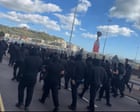
Far-Right Protesters Gather in Portsmouth Over Migrant Boat Arrival

Large-Scale Far-Right Gathering Emerges in Portsmouth
A significant number of far-right activists mobilized in Portsmouth following the arrival of a small vessel carrying approximately 140 asylum seekers intercepted near the port's coastline. This Portsmouth migrant boat protest represents a notable escalation in organized responses to maritime asylum arrivals, with the event drawing considerable public attention and security resources to the seaside location.
The interception operation involved substantial deployment of emergency services, including helicopter support, aerial reconnaissance, and multiple lifeboat units positioned to manage the vessel safely. The coordinated response underscored the operational complexity associated with processing such maritime arrivals in real-time.
Unprecedented Scale of Organized Response
Local authorities confirmed this marked the first instance of such a substantial vessel bringing asylum seekers directly to Portsmouth, while simultaneously representing the initial coordinated effort by organized anti-migrant groups to physically impede processing operations at this particular port facility.
The protest organization relied significantly on digital coordination, with online influencers livestreaming the event and explicitly encouraging male participants to travel to Portsmouth with the stated objective of blockading transportation coaches designated to relocate newly arrived asylum seekers from the processing area.
Security and Operational Challenges
The concentration of far-right activists at the port presented unprecedented security considerations for local law enforcement and port authorities. Managing both the arrival logistics and the simultaneous large-scale demonstration required careful coordination between multiple agencies operating under heightened alert conditions.
The small boat arrival itself generated significant logistical demands, necessitating rapid medical assessment, accommodation arrangements, and processing protocols for the 140 individuals aboard the vessel. The simultaneous presence of organized protesters attempting to disrupt these standard procedures created additional layers of complexity for officials managing the situation.
Digital Organization and Influencer Role
The mobilization tactics employed by protest organizers demonstrated sophisticated use of social media platforms and livestreaming capabilities to coordinate participation. By broadcasting real-time updates and explicitly requesting attendees to converge on Portsmouth, organizers leveraged digital tools to amplify the scale and visibility of their demonstration.
This approach to organizing collective action around the Portsmouth migrant boat protest represented a notable tactical evolution in how far-right movements coordinate responses to asylum-related events, moving beyond traditional protest infrastructure to incorporate contemporary digital communication networks.
Port Operations and Future Implications
The incident raises substantive questions regarding port security protocols and management strategies for handling simultaneous maritime arrivals and organized public demonstrations. Portsmouth's experience as the first major far-right gathering at the port in response to asylum arrivals may establish precedents affecting future operational procedures.
Maritime authorities and local government officials were forced to rapidly adapt response mechanisms to address both conventional rescue and processing responsibilities while contending with external pressure from organized groups seeking to obstruct standard procedures. The successful completion of processing operations despite external disruption attempts demonstrated existing systems' resilience, though challenges in managing similar future scenarios remain evident.
Context of Asylum Policies and Border Control
Small boat arrivals in UK waters have continued as an ongoing policy challenge, with various ports occasionally serving as landing sites depending on maritime conditions, rescue coordination protocols, and vessel routes. Portsmouth's emergence as a destination for such arrivals represents a geographical shift in where these intercepted vessels are processed and handled.
The concentration of far-right activists on Portsmouth's waterfront reflects broader polarization surrounding asylum and immigration policy, with organized groups seeking to exert direct pressure on government processing procedures through public demonstration and obstruction tactics. The 140 asylum seekers aboard the intercepted vessel represented individuals whose circumstances prompted dangerous maritime journeys despite known risks and enforcement operations.
Conclusion
The Portsmouth migrant boat protest incident marked a significant development in how organized anti-migrant movements coordinate responses to asylum arrivals. The combination of the small boat's unprecedented scale for the location and the first organized blockade attempt by far-right activists created a unique operational scenario for authorities managing both rescue responsibilities and public order considerations simultaneously.